

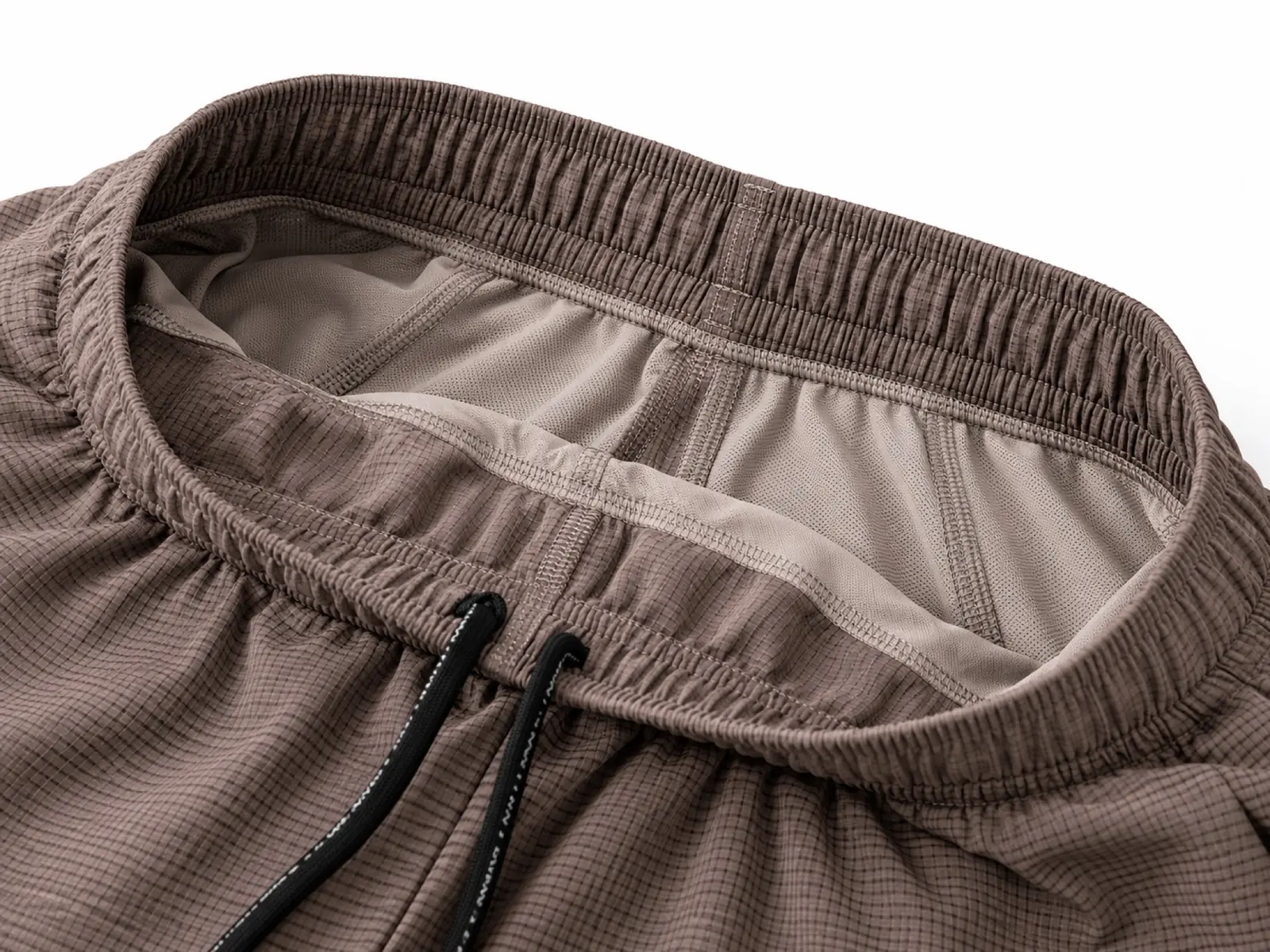
01
Waistband Security
Confirm elastic width, enclosure, drawcord access and stress areas according to expected movement.
Develop training, running, mesh and 2-in-1 shorts with attention to inseam, liner comfort, waistband and storage.
Made to Order · Gym / Running / 2-in-1

Develop running, training and 2-in-1 shorts around inseam, liner comfort and waistband construction.

Training shorts balance inseam length, waist security and movement clearance. Specify whether the priority is gym use, general training, relaxed fit or multi-purpose wear before choosing construction details.

Running shorts can prioritize weight, side-split movement, pocket bounce control and optional brief lining. A shorter inseam changes both coverage and performance expectations.

Two-layer shorts combine a loose outer layer and a fitted inner layer. Confirm liner stretch and recovery, inner length, seam bulk and phone-pocket placement independently from the outer short design.

Mesh shorts suit visual texture and casual athletic collections. Review mesh transparency, lining choice, waistband support and logo method before selecting the final fabric.

The outer layer and inner liner should be designed together. Confirm the liner opening, seam position, rise, phone-pocket support and how the layers move during bending and running.
Confirm elastic width, enclosure, drawcord access and stress areas according to expected movement.

Review leg opening, compression intent, liner-to-outer attachment and seam friction.

Check pocket location, entry direction and load behavior, especially for phones and keys.
Running shorts, gym shorts and 2-in-1 shorts can differ at the waistband, liner, pocket and inseam. A phone pocket may be useful but can influence bounce and comfort; a liner can provide coverage but must be matched to shell length and movement. Review the combination on the sample rather than approving components separately.

Category-specific notes. Full fabric, technique and branding details live on their specialist pages.

Stretch woven polyester or nylon, selected polyester-spandex knits and mesh structures can play different roles in the shell, liner and ventilation areas.
Final fabric choice should be reviewed with reference samples, hand feel, available colors and the specified use; GSM and performance are confirmed per material.
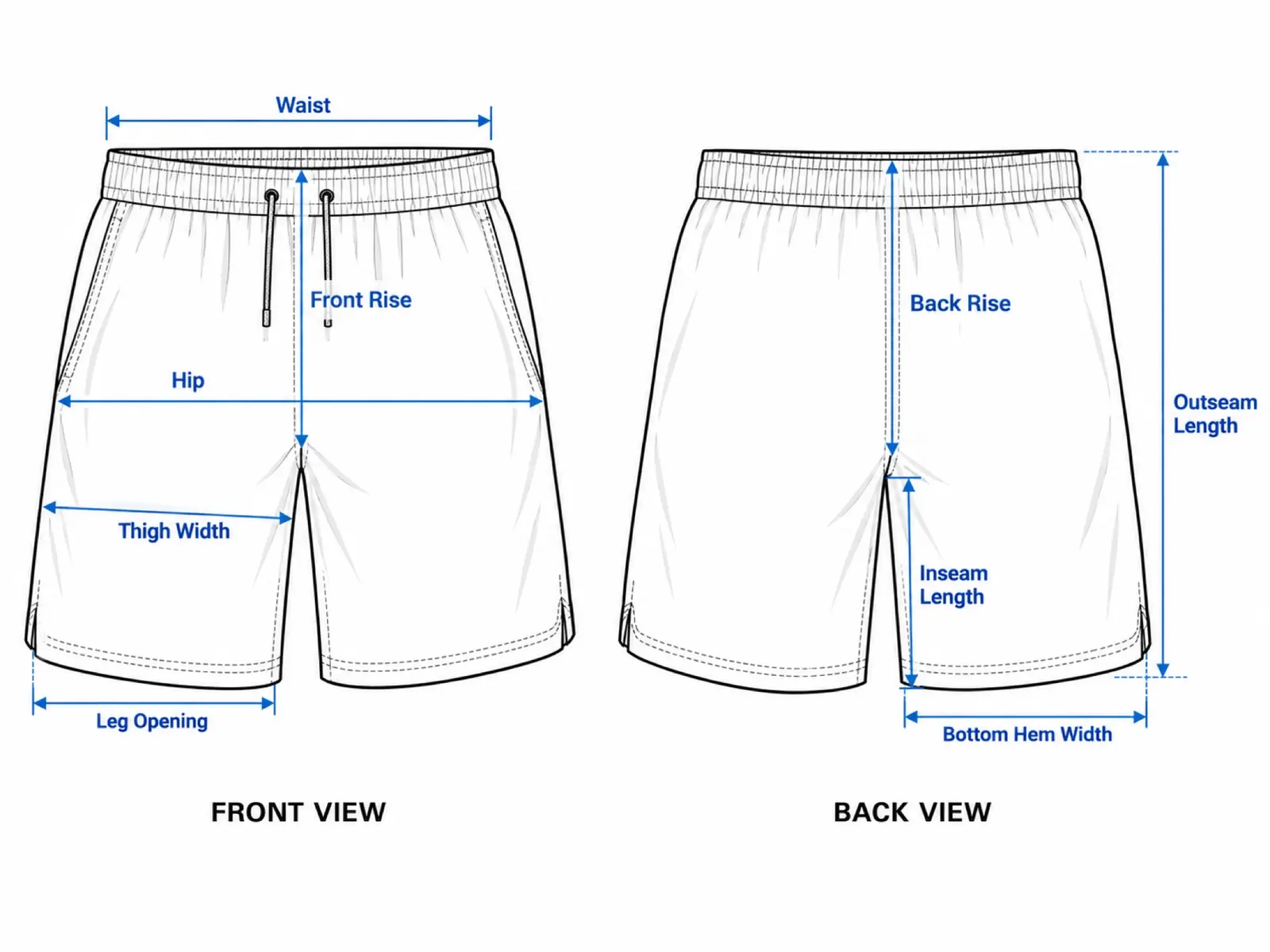
Confirm reference size, chest or waist, garment length, opening and activity allowance using a measured reference and sample—not size labels alone.
Share a target Pantone reference or physical swatch if available. We review suitable supplier colors or custom color-development options where feasible.
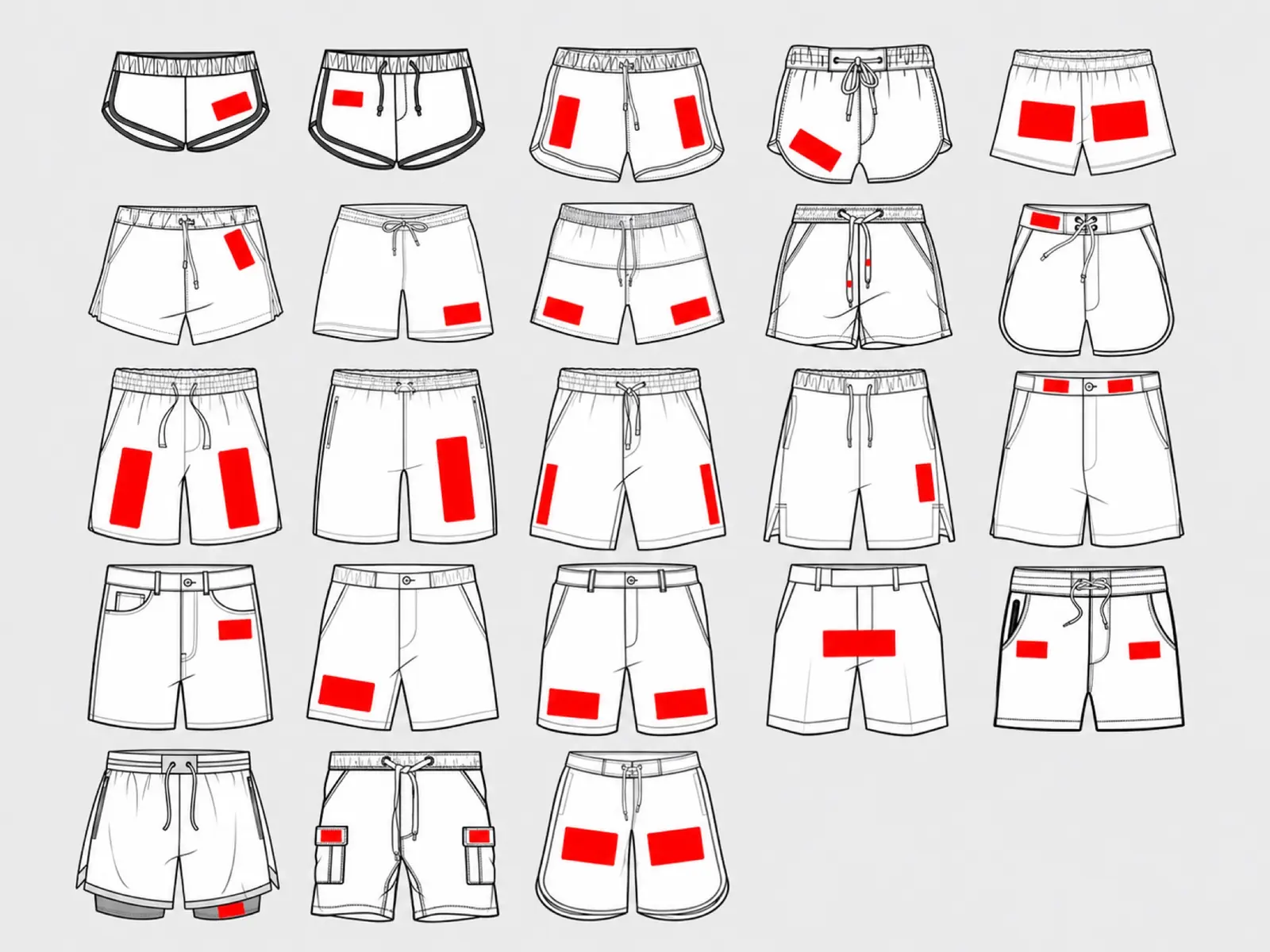
Leg logos, small reflective details and waistband identity can be positioned after reviewing stretch and seam placement.
Main labels, size labels, care labels, hangtags and packaging can follow one approved brand specification for the range.
Example only: share a product direction and reference, review materials and technical details, develop a sample, confirm measurements and artwork, then approve the production reference.


Details that help us review your Shorts project. Anything not yet decided can be marked “Not Sure Yet” in the project form.
Project minimums start from 50 pieces for applicable styles; final quantities depend on design, fabric, color and production requirements.
Yes. Inseam length can be specified and reviewed alongside side opening, rise and overall proportion.
A liner pocket can be considered, but location, pocket stretch and support should be checked in a sample.
Yes. Their hand feel, stretch and seam compatibility should be confirmed as one garment system.
No. Inner-layer coverage, stretch and compression level can be specified based on intended use. Sampling is needed to validate the fit and leg opening.
That is one common direction. Pocket position and attachment need review for access, bounce and comfort, particularly during running.

Send your design direction, quantity and references to begin a project review.