

01
Shell and Lining System
Record shell construction, lining choice, ventilation openings and seam decisions as one technical system.
Build lightweight outer layers around shell selection, lining strategy, ventilation and sport-ready construction.
Made to Order · Training / Travel / Outer Layer

Build lightweight sports outer layers around shell choice, lining, ventilation and movement.

Track jackets often rely on a coordinated collar, front zip, pockets and cuff/hem system. The garment should be reviewed both as a standalone layer and as part of matching track pants.
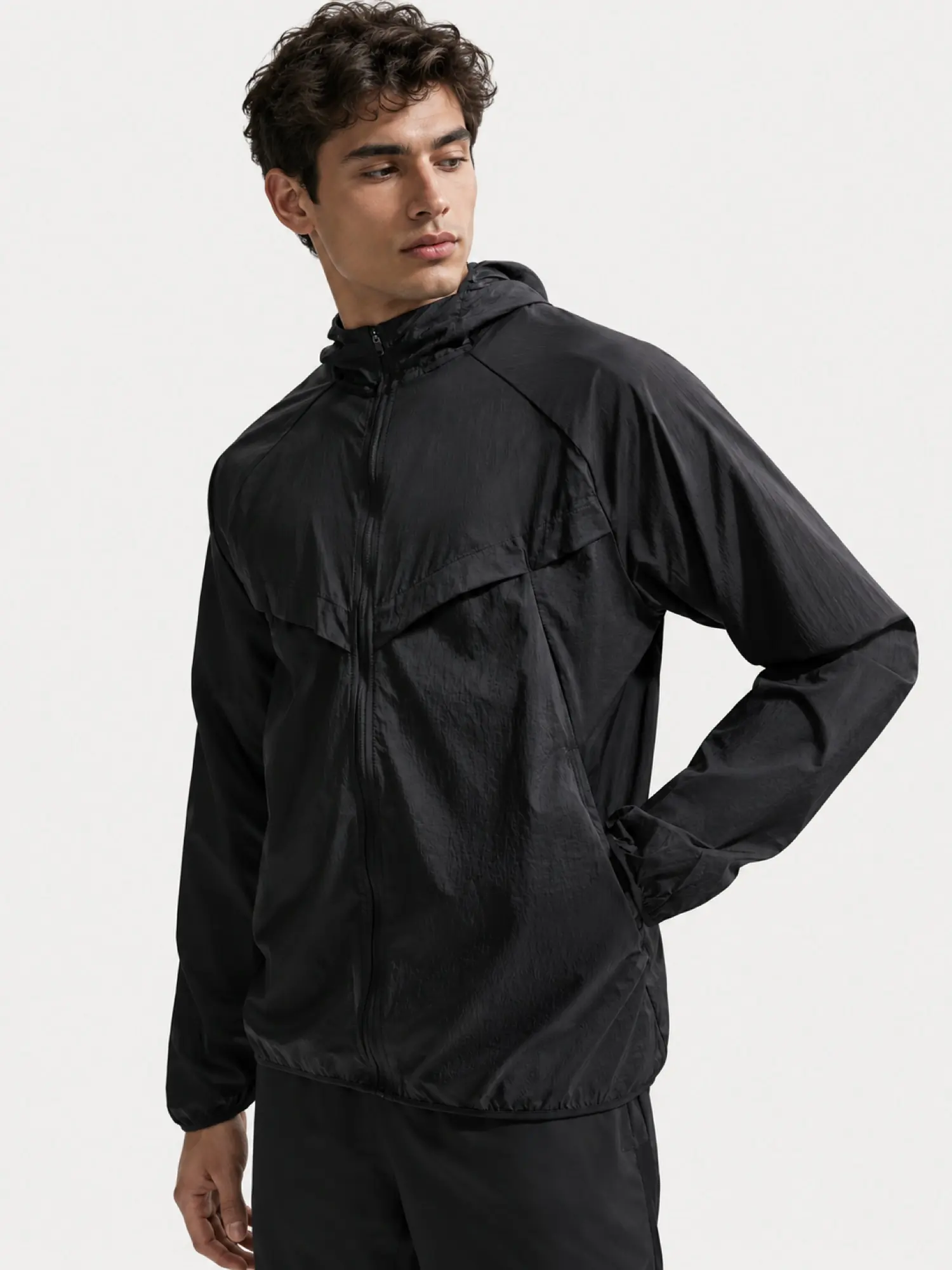
A training jacket may need reach-friendly sleeves, enough room over a base layer and pocket access during movement. Panel geometry can support a sporty look but should not compromise construction.

A windbreaker can use lightweight woven shell fabric with an optional lining or vent arrangement. Wind-resistant or water-repellent claims depend on selected materials and verified finishing, not on the style name.

Lightweight jackets can be developed around packability, lower-bulk seams, pocket design and a simple closure system. Review comfort over intended inner layers and final packed volume if relevant.

Review shell fabric and lining as a working system. Mesh lining, unlined construction, ventilation areas and panel seams influence comfort, bulk and ease of movement.
Record shell construction, lining choice, ventilation openings and seam decisions as one technical system.

Check zipper direction, collar standing, front-end reinforcement, pockets and drawcord route where relevant.

Avoid claiming waterproof, windproof or breathable properties without appropriate material information or test data.
A sports shell must be evaluated around intended movement and layering rather than jacket styling alone. We discuss collar height, underarm space, closure access, packability and whether a lining is needed. Water-resistance or wind-performance claims must be tied to verified materials or tests, not inferred from the look of the fabric.

Category-specific notes. Full fabric, technique and branding details live on their specialist pages.
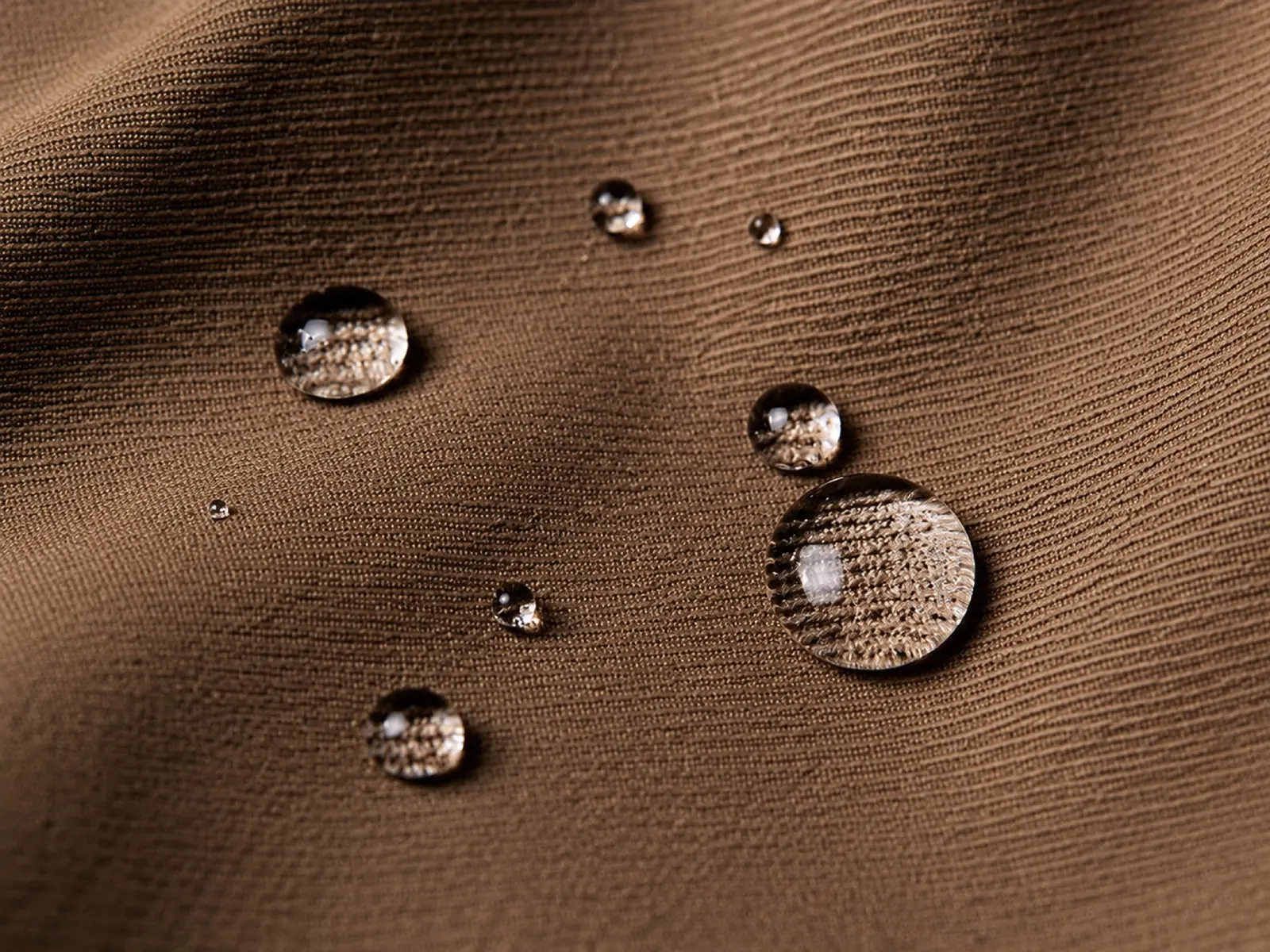
Polyester and nylon wovens, ripstop, tricot or softshell constructions can be evaluated by weight, feel, layering, movement and verified resistance characteristics.
Final fabric choice should be reviewed with reference samples, hand feel, available colors and the specified use; GSM and performance are confirmed per material.
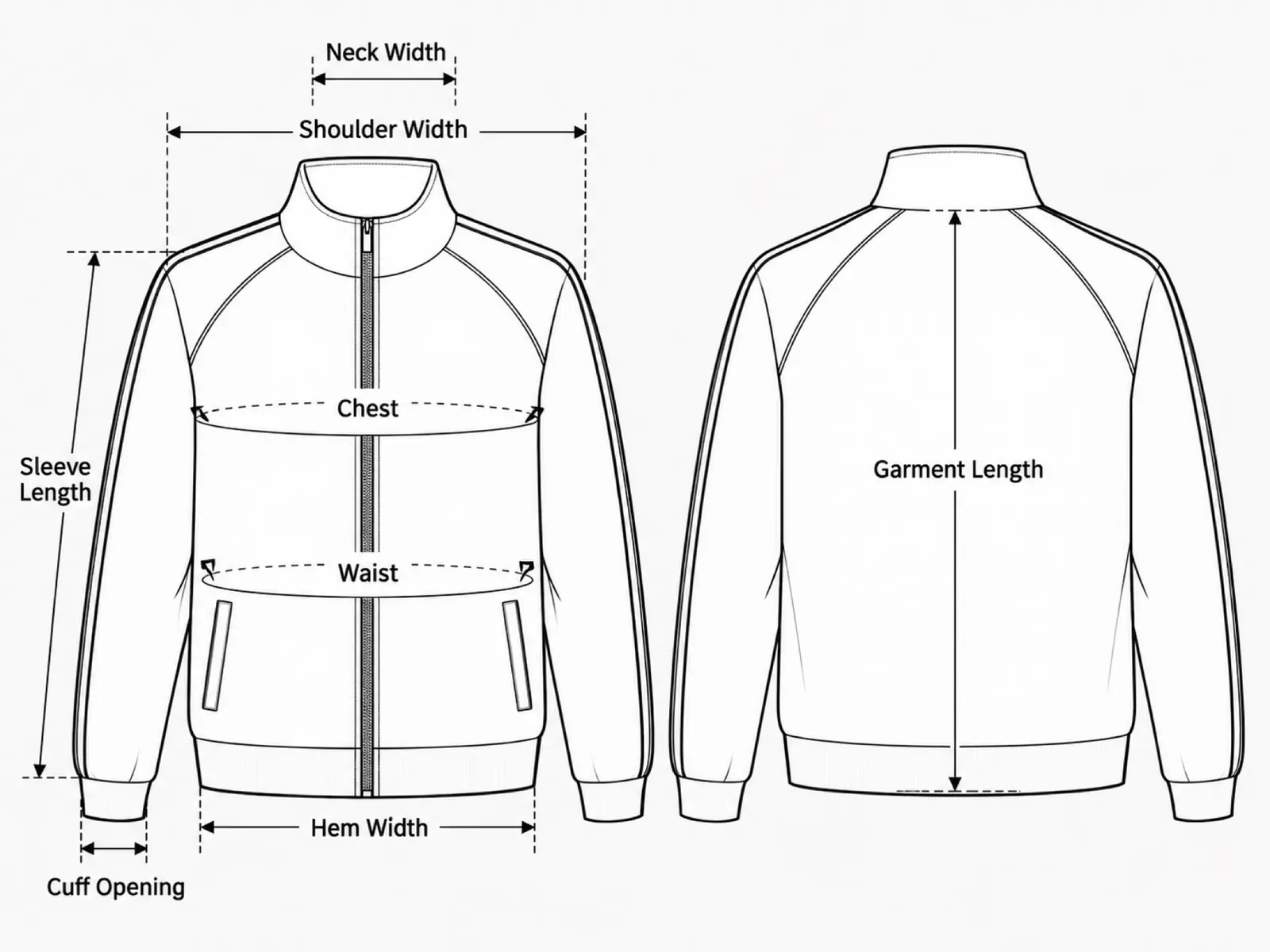
Confirm reference size, chest or waist, garment length, opening and activity allowance using a measured reference and sample—not size labels alone.
Share a target Pantone reference or physical swatch if available. We review suitable supplier colors or custom color-development options where feasible.
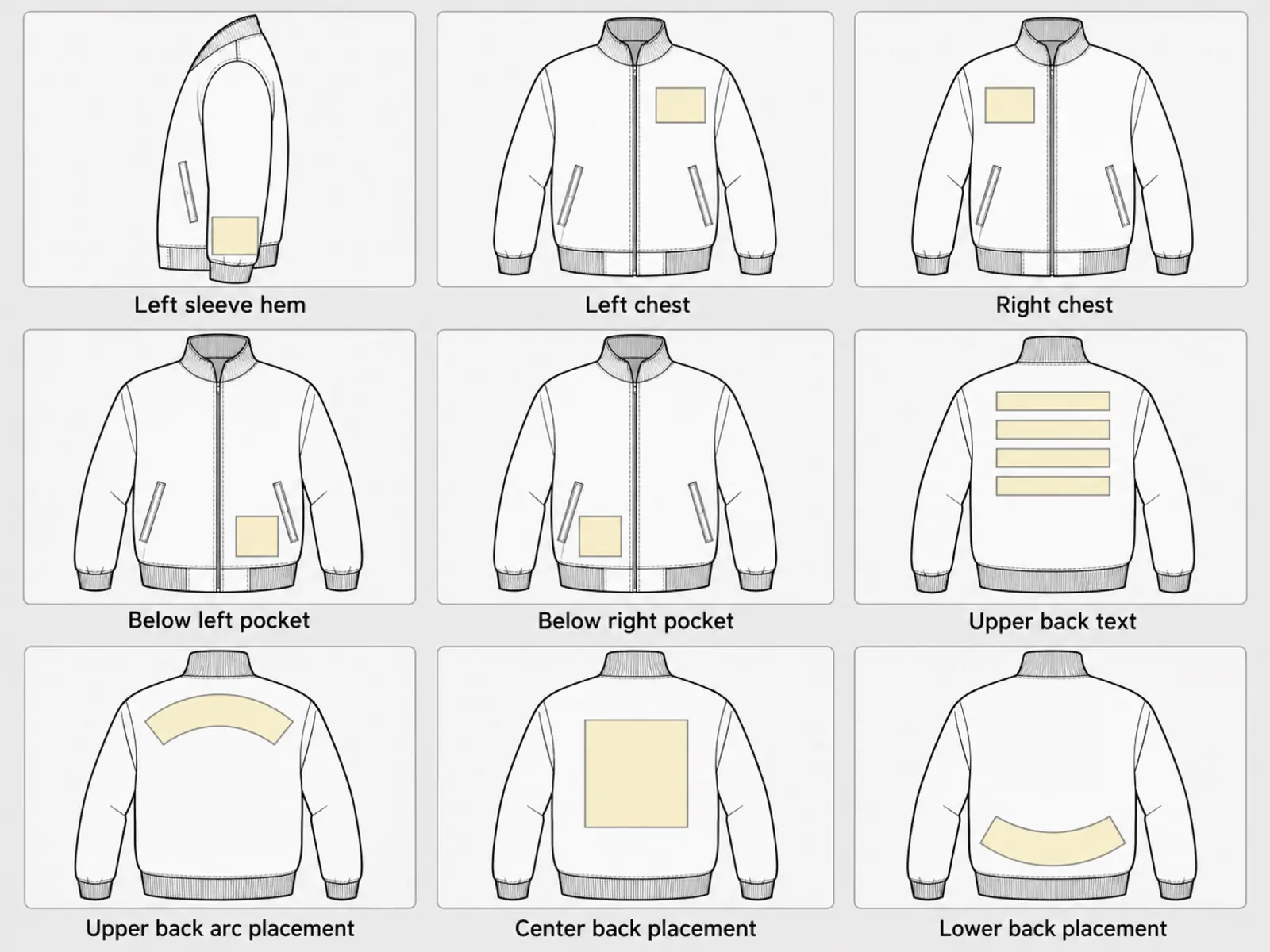
Reflective transfers, small chest artwork and selected patches should be reviewed for adhesion or stitching effects on the chosen shell material.
Main labels, size labels, care labels, hangtags and packaging can follow one approved brand specification for the range.
Example only: share a product direction and reference, review materials and technical details, develop a sample, confirm measurements and artwork, then approve the production reference.

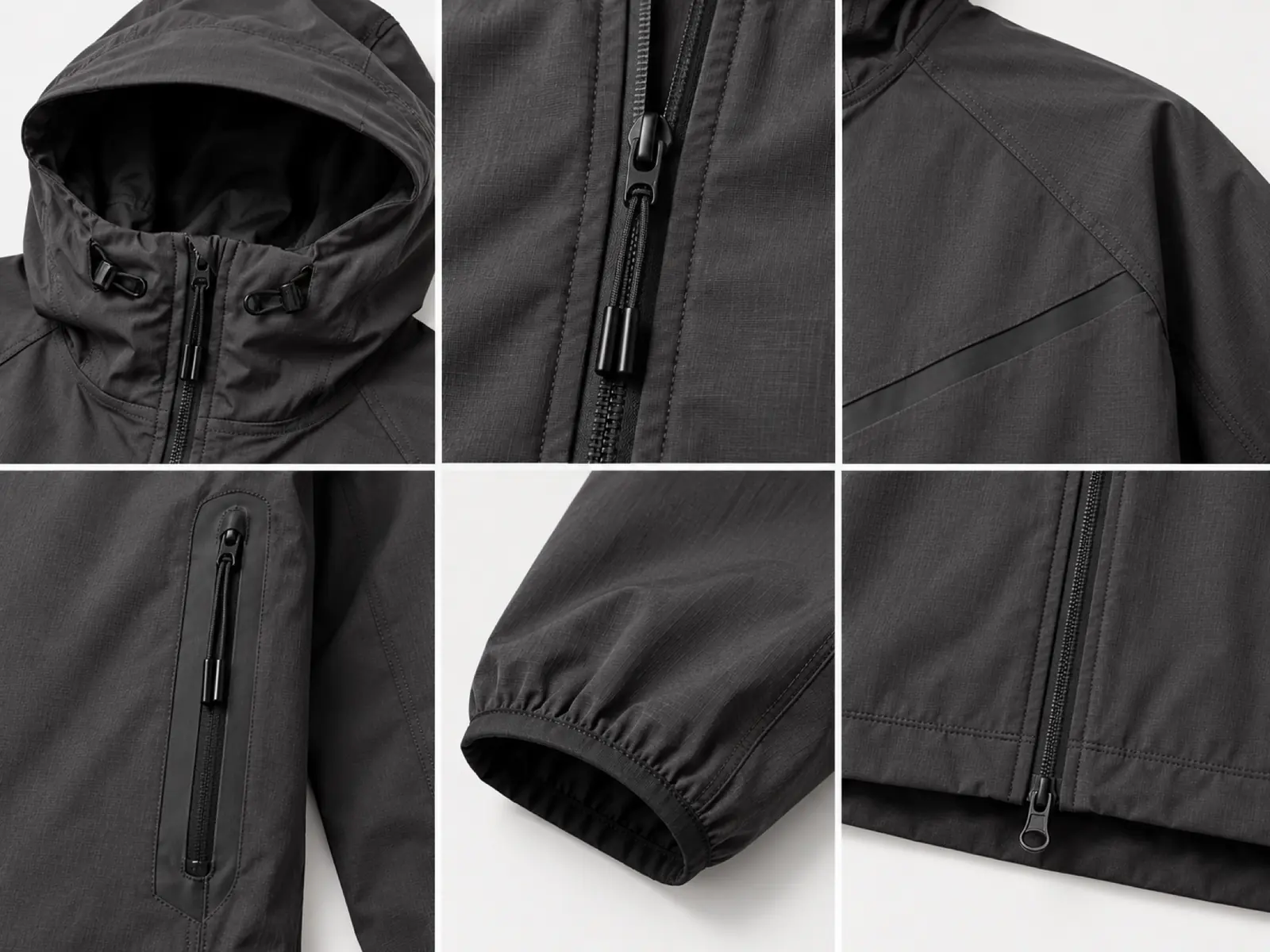

Details that help us review your Jackets project. Anything not yet decided can be marked “Not Sure Yet” in the project form.
Project minimums start from 50 pieces for applicable styles; final quantities depend on design, fabric, color and production requirements.
Both directions can be reviewed; the choice depends on the shell, desired hand feel and internal seam finish.
Only when the finished material and garment construction have suitable supporting evidence. A water-repellent fabric alone does not prove a waterproof jacket.
Yes. We can review compatible colors, trims and construction direction for a coordinated warm-up set.
Yes, that is a possible development direction. The shell, lining and ventilation layout should be sampled together to assess comfort, drape and construction.
No. Rain resistance depends on material finishing, seam construction and testing. Specify the intended requirement rather than relying on a generic product name.

Send your design direction, quantity and references to begin a project review.