01
Silhouette Comparison
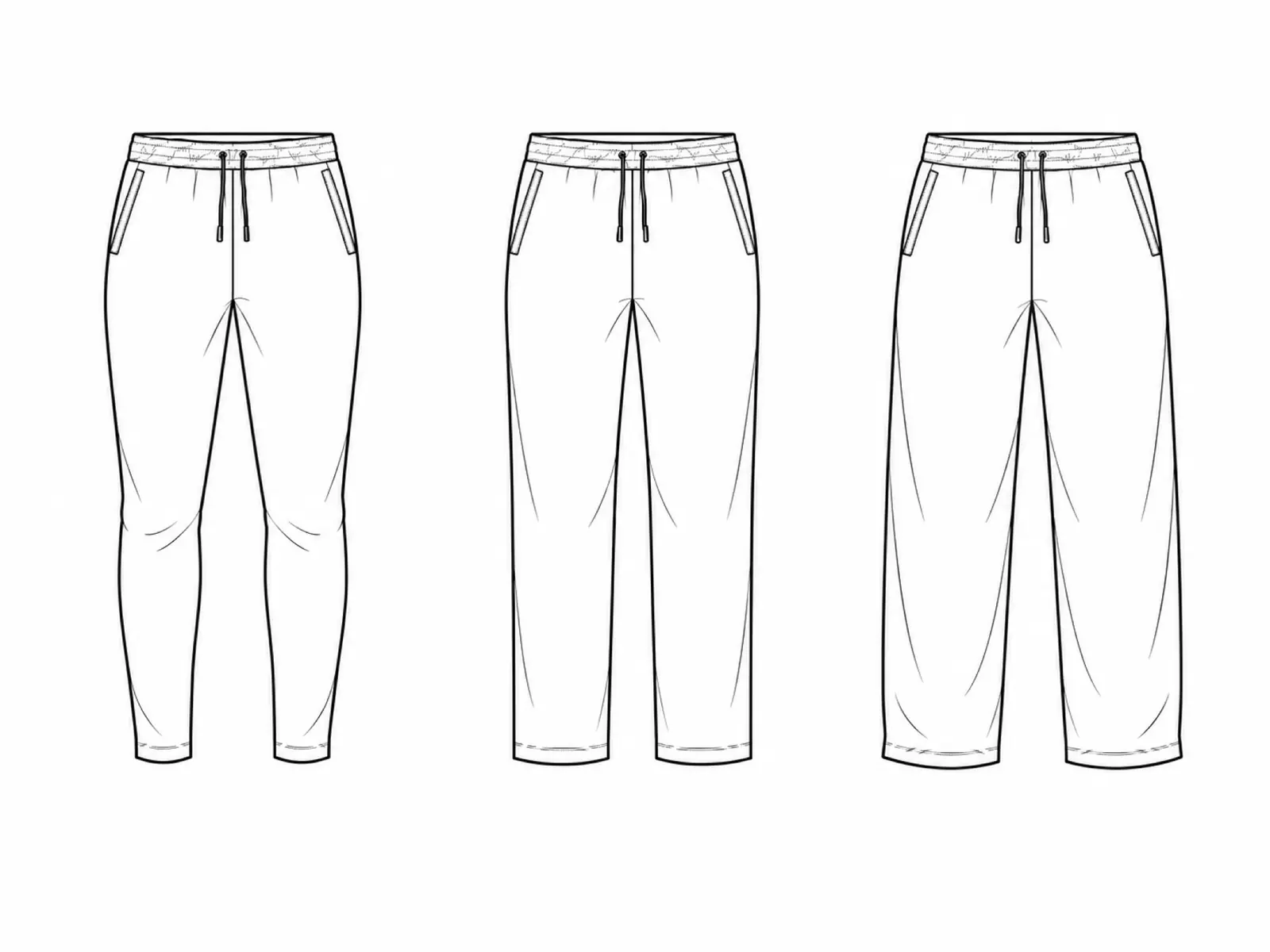
Use one comparable model set to show tapered, straight and relaxed leg shapes, with inseam and hem widths recorded.
Refine leg silhouette, knee movement, waistband structure, hem openings and pocket placement for your sportswear bottoms.
Made to Order · Training / Track / Lifestyle

Balance leg silhouette, fabric movement, pocket placement and hem opening for custom sports pants.

Joggers typically use a tapered leg and controlled ankle opening. Fit approval should cover thigh ease, knee movement, cuff pressure and shoe coverage.
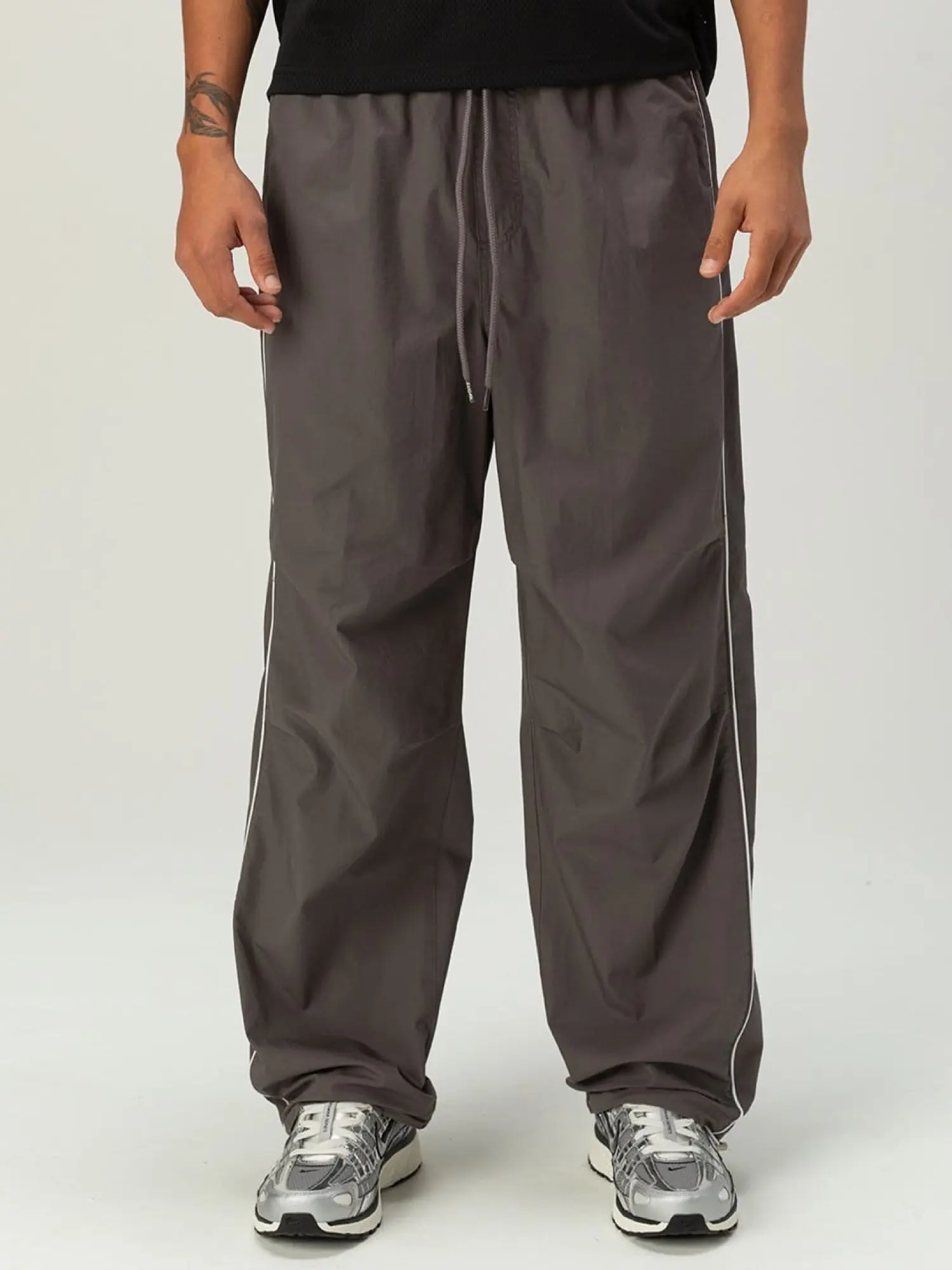
Track pants can use knit or woven constructions and may include zip pockets or ankle openings. Assess drape, side seams and matching jacket proportions together.

Training pants should be reviewed during squat, lunge and stride movements where relevant. Knee shaping, rise, waistband security and pocket location affect the wearing experience.

Straight-leg pants emphasize a clean line from knee to hem. The full-length opening, footwear interaction and fabric drape should be assessed on a fitted sample.

Compare tapered, straight and relaxed leg blocks at the same scale. Knee room, thigh ease, hem opening and fabric drape should be judged as a system.
Use one comparable model set to show tapered, straight and relaxed leg shapes, with inseam and hem widths recorded.

Evaluate rise, crotch extension and knee room according to target movement rather than standard labels alone.

Confirm rib cuff, elastic cuff, open hem or ankle zip based on intended shoe coverage and appearance.
Cuffed joggers, open-hem track pants and relaxed straight-leg sports pants produce different movement and visual proportions. Hem opening, inseam, thigh ease and fabric recovery should be considered together, especially when a matching jacket or hoodie is planned. Approve the final leg profile across more than one size.

Category-specific notes. Full fabric, technique and branding details live on their specialist pages.
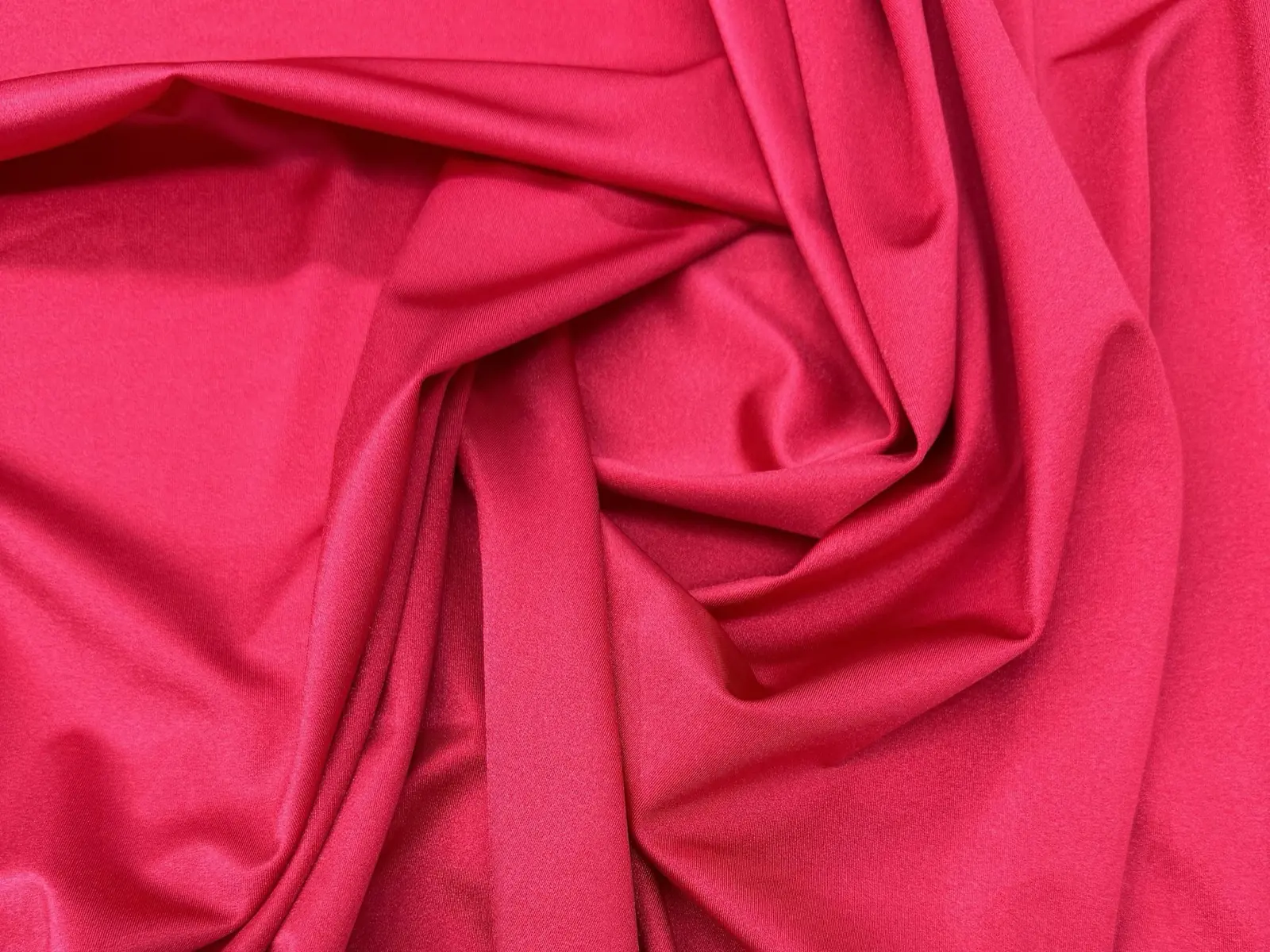
French terry, tricot, interlock, stretch woven and selected softshell options can be matched to the required movement, weight and silhouette.
Final fabric choice should be reviewed with reference samples, hand feel, available colors and the specified use; GSM and performance are confirmed per material.
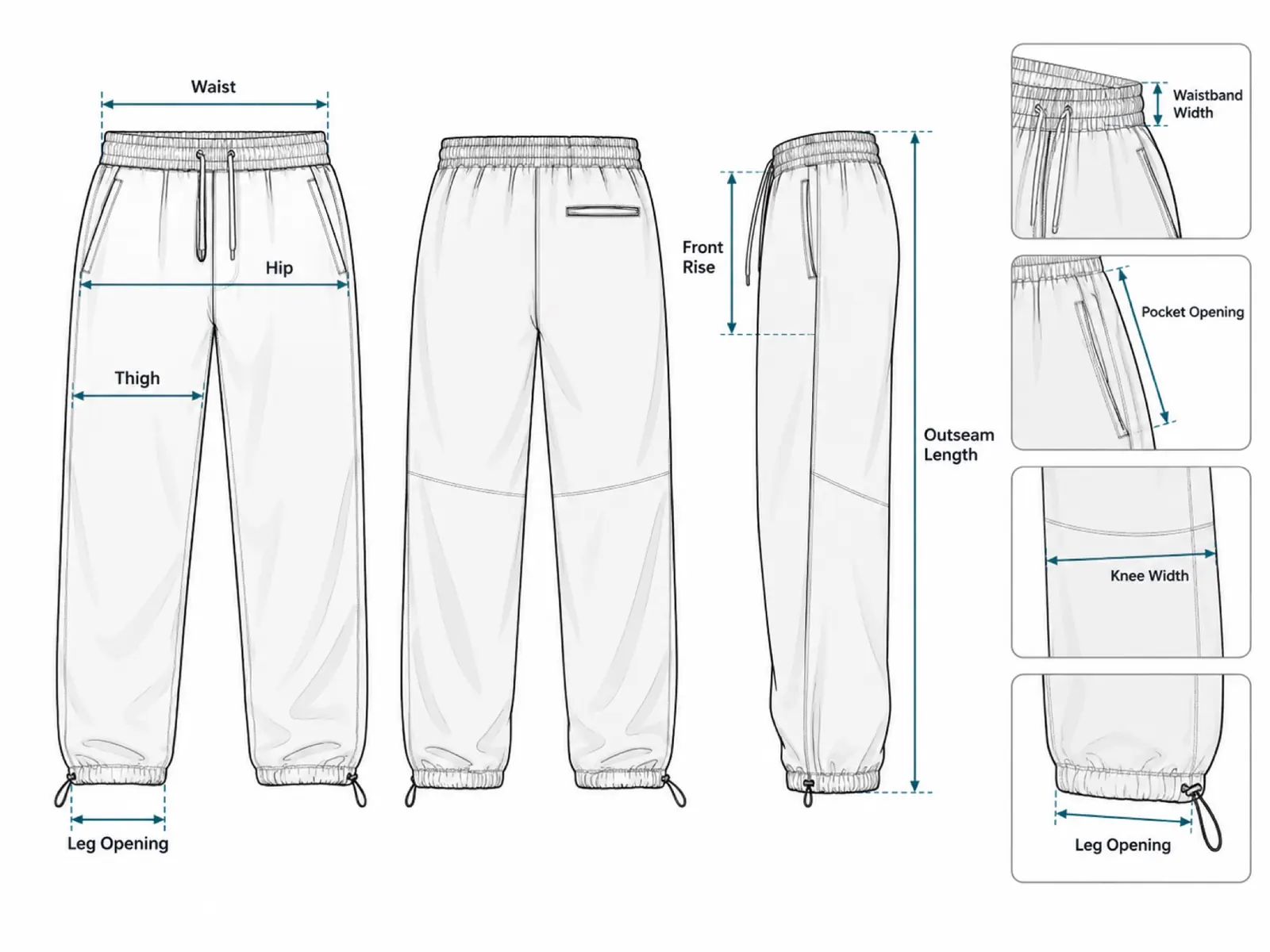
Confirm reference size, chest or waist, garment length, opening and activity allowance using a measured reference and sample—not size labels alone.
Share a target Pantone reference or physical swatch if available. We review suitable supplier colors or custom color-development options where feasible.
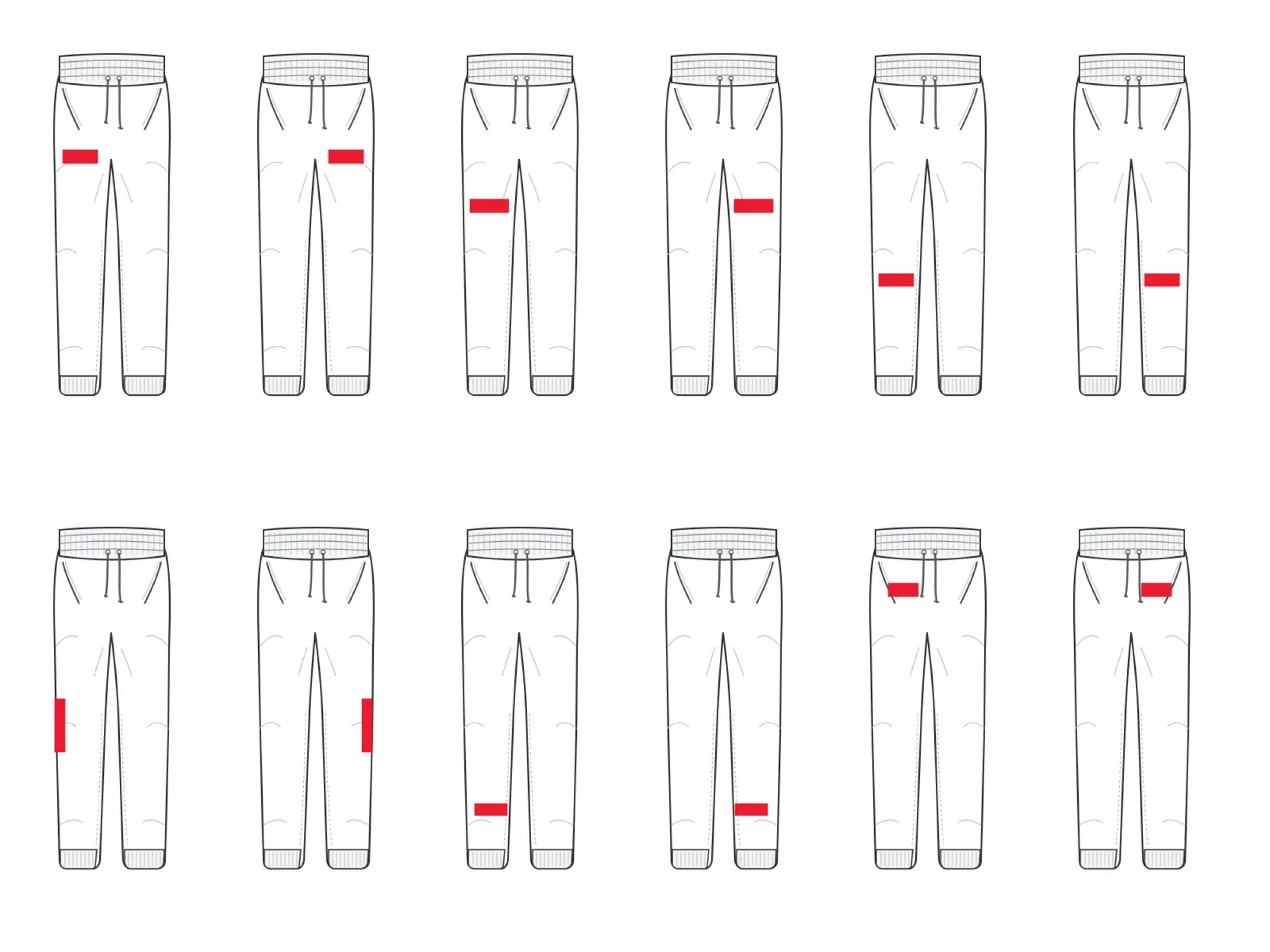
Side-leg prints, small embroidery and reflective positioning should respect seam placement, stretch and the selected hem style.
Main labels, size labels, care labels, hangtags and packaging can follow one approved brand specification for the range.
Example only: share a product direction and reference, review materials and technical details, develop a sample, confirm measurements and artwork, then approve the production reference.


Details that help us review your Pants & Joggers project. Anything not yet decided can be marked “Not Sure Yet” in the project form.
Project minimums start from 50 pieces for applicable styles; final quantities depend on design, fabric, color and production requirements.
Not covered here? Send your project and ask us directly.
Yes. Open hem, elastic cuff and rib cuff are different construction options and require separate measurements.
Relaxed and wider leg proportions can be developed from target measurements and fit references.
Approved measurements, grading decisions and sample review are used as the reference for each size range.
Yes, as a new pattern direction. Leg taper, hem width and length may need adjustment; removing a cuff alone can change the intended proportion.
Use the sample on the intended fit model and review rise, seat and knee room against the target movement. Record required revisions before approval.

Send your design direction, quantity and references to begin a project review.