
01
Fabric Receipt & Preparation
Material references, color and usable width are checked against the approved plan before cutting is arranged.

Every sportswear program brings a different combination of fabrics, sizing, construction and brand requirements. Our production work translates confirmed product information into cutting, assembly, finishing and packing instructions for each garment category.


A capable production setup is easier to understand when you can see the work. Show the workstations, fabric-handling areas and people responsible for cutting, sewing and finishing. Rather than relying on generic claims about advanced equipment, explain the actual operation shown in each photograph and why it matters to custom sportswear orders.


Fabric is laid and cut against the approved pattern, so panel shapes match the confirmed sample.
Operators assemble each style with the seam types its material and construction call for.
Trimming and pressing prepare garments for measurement and the final review.
Bulk work starts from the approved sample, size specification, panel details and artwork placement. From there the sequence is coordinated from fabric receipt and preparation through pattern-guided cutting, size-based bundling, sewing, approved branding operations, finishing and packing. Each step uses the specifications relevant to the garment.
Material references, color and usable width are checked against the approved plan before cutting is arranged.

Panels are cut from the approved pattern, with critical dimensions and panel shapes reviewed first.

Cut panels are bundled by size and garment part to avoid mix-ups and keep construction aligned.

Seam type and handling follow each material and product—tops, shorts liners, waistbands and elastic openings need different controls.

Approved branding operations, thread trimming and pressing prepare each garment for the final review.
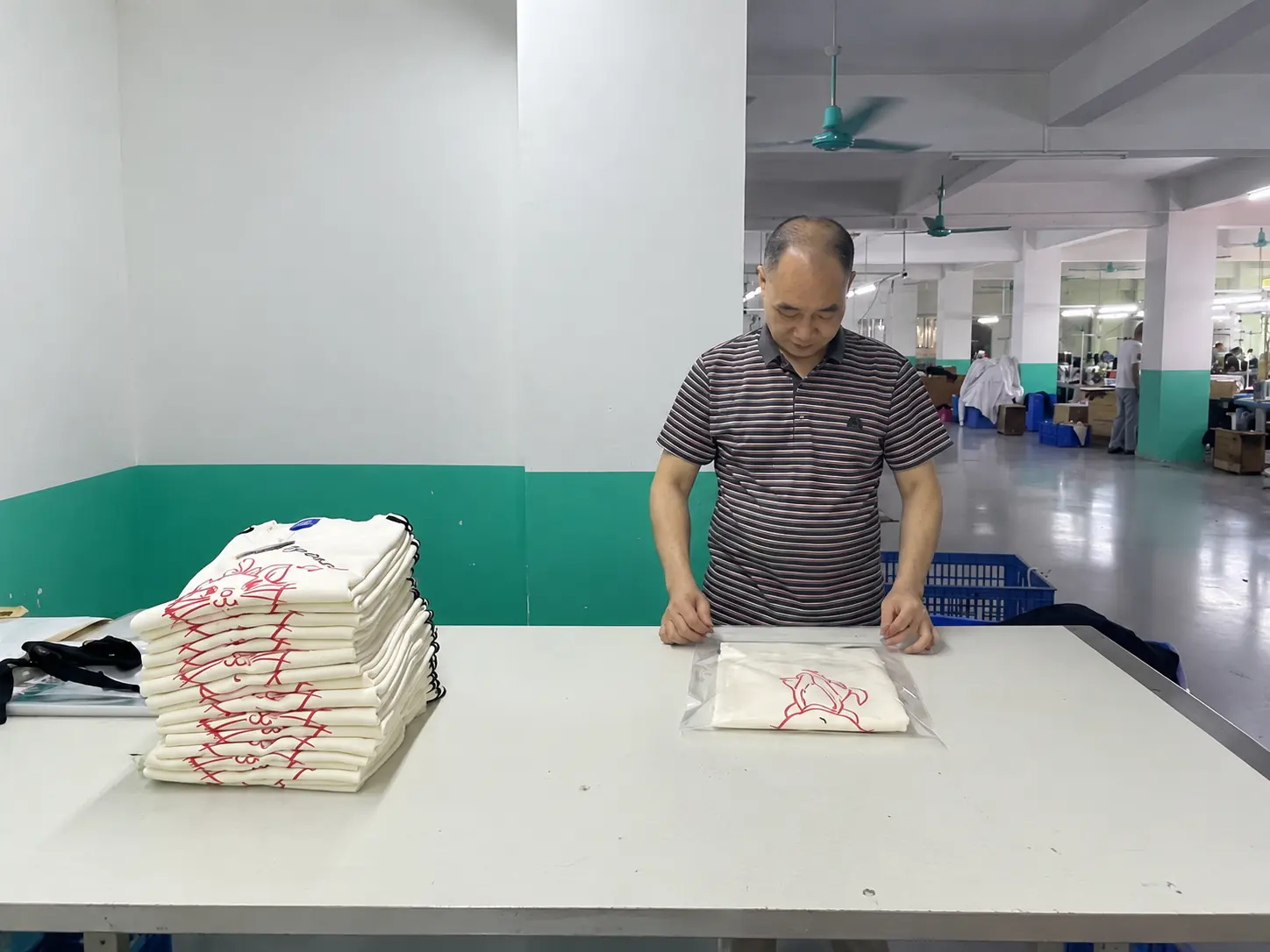
Garments are packed to the confirmed requirements, with size identification and carton marking reviewed before dispatch.
A running top, lined shorts and matching tracksuit do not share one construction checklist. Tops call for attention to neckline and armhole shaping; lined shorts need coordinated inner and outer layers; pants depend on leg symmetry and hem finishing; sets require aligned branding and size pairing. Stretch materials add their own sewing decisions on top. These are manufacturing considerations, not fixed products available from stock.
Neckline binding and armhole shaping are sewn to keep the approved shape and balance across sizes.
The liner and outer short are joined so both layers sit and move as the approved construction intends.
Left and right legs, side seams and hem finishing are kept consistent from pair to pair.
Tops and bottoms carry aligned branding and are paired by size before packing.
Stitch type matched to the knit so seams stretch with the garment instead of popping or waving.
Allowances set for the fabric weight and edge behaviour of each panel.
Fabric fed without stretching it out of shape during sewing.
Liners and waistbands joined to the approved alignment marks.
An attractive design can be difficult to reproduce if material stretch, cut-part alignment or multi-layer assembly is not considered. Typical production risks include wavy seams in stretch knits, misaligned panels, twisted liners, uneven hems and misplaced artwork. Formal inspection criteria are explained on the Quality Control page.

Confirm stitch type, seam allowance and feed handling on the approved fabric before bulk sewing.

Join liner and outer layer to the approved alignment marks; keep the attachment sequence consistent.

Cut to the approved pattern with notches, and bundle panels by size and part to avoid mix-ups.

Position logos from the approved placement reference for each size before application.
Illustrative manufacturing scenario — not a claim about a completed client order. Imagine a coordinated training top and 2-in-1 shorts program after specifications have been approved. The workshop would prepare separate cut-part groups, manage the shorts liner assembly, confirm artwork placement and coordinate the packing identifiers for both styles. The point is to show how a factory organizes production, not to present another collection-design story.

Separate cut-part groups for the top and the shorts.

The shorts liner joined to the outer layer as approved.

Artwork placement confirmed on both styles.

Packing identifiers coordinated for the two styles.
Not covered here? Send your project and ask us directly.
Our made-to-order manufacturing approach is organized around confirmed product specifications, sample references and agreed materials. Specific construction capabilities should be reviewed for each project.
A coordinated program can be reviewed according to garment types, material availability, production requirements and scheduling. Shared colors and branding details should be documented across styles.
Material behavior and proposed construction need to be reviewed during sampling. Production then follows the approved construction references and suitable sewing methods available for the fabric.
Appropriate workshop photos, production-stage records or a factory review can be discussed depending on access permissions and confidentiality requirements.
The Quality Control page describes what is reviewed against confirmed samples and specifications; exact inspection arrangements are agreed for each project.

Send your design references, intended quantities and construction details.